01 / 20

Environmental Biology · Bundle 3 · Day 2

Trophic Cascades

The rivers changed shape because the wolves came back.

A story that runs in the wrong order. The solution is how we discovered the problem.

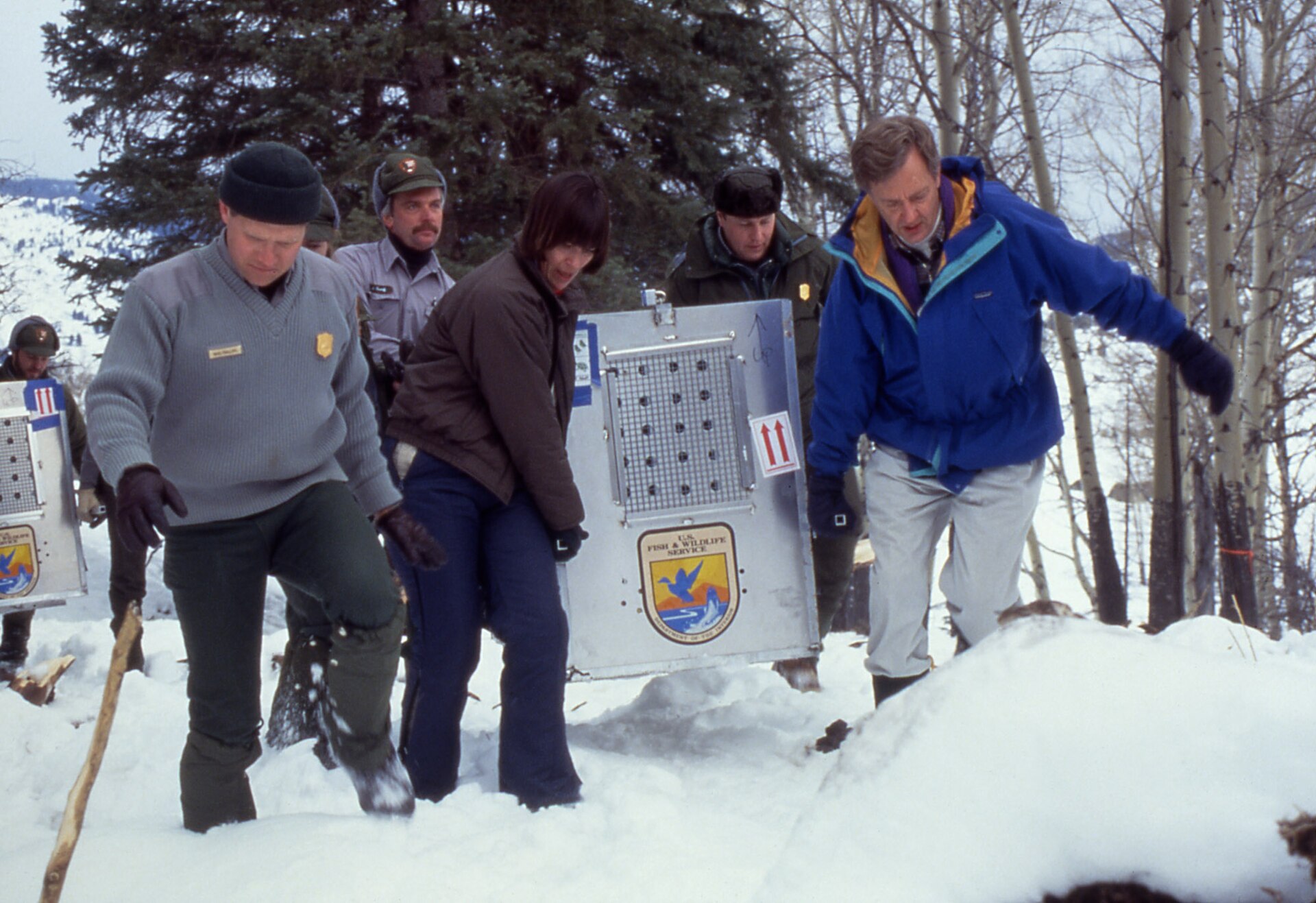
02 / 20 U.S. Fish and Wildlife Service personnel in winter gear carry a large grid-fronted wolf transport crate through snow at Yellowstone National Park, January 1995.

January 1995. Lamar Valley.

Fourteen wolves arrive in crates. Seventy years of absence ending. None of the people standing there knows what's about to happen to the landscape.

03 / 20

Backstory · Early 1900s

By 1970, wolves are gone from the lower 48.

From around two million across North America down to a few hundred animals in Minnesota. The Bureau of Biological Survey ran bounties. Hunters poisoned carcasses with strychnine. By the 1920s, Yellowstone's wolves were already gone.

Hold the spectrum. The ranchers had real losses. A wolf will take a calf in a night. Government policy made killing predators the rational thing to do. People did what the structure rewarded them for doing. This isn't a villain story. It's a structural one.

04 / 20

Yellowstone without wolves · 1925 – 1995

Decades of weirdness.

An ecosystem that didn't make sense, and nobody could quite say why.

Elk explode

By 1990, around 19,000 elk on the northern range. So many that the Park Service was culling them itself.

Willow disappears

Willow stands along the river valleys thin out. Aspen and cottonwood stop regenerating. New ones aren't growing.

Beavers collapse

Beavers need willow to dam with. No willow, no beavers. Wetlands behind the dams disappear too.

Rivers change shape

Without willow roots holding the banks, streams widen and erode. Songbirds in the willow thickets go quiet.

05 / 20

Before 1995 · The missing piece

Everyone had a piece. Nobody had the whole thing.

Climate

Maybe the willows were stressed by drought cycles. Maybe the elk numbers were a separate problem.

Fire suppression

We were putting out fires that used to clear things periodically. Forests were getting overgrown.

Grazing

Maybe domestic livestock outside the park were the bigger problem.

Bad management

The Park Service had been moving elk around and winter-feeding them. Maybe that was it.

The science was waiting on an experiment nobody had run yet.

06 / 20

After 1995 · Yellowstone elk, northern range

The number changed. The behavior changed more.

19,000
Before wolves · 1990
6,000
After wolves · 2008

But the bigger thing isn't the count. It's where the elk would stand.

07 / 20

A new phrase enters ecology · 2000s

The ecology of fear.

Animals don't only avoid getting eaten. They avoid the places where they might get eaten. After 1995, elk in Yellowstone stop standing in the river valleys for eight hours a day. They move uphill, onto open ridges with sightlines.
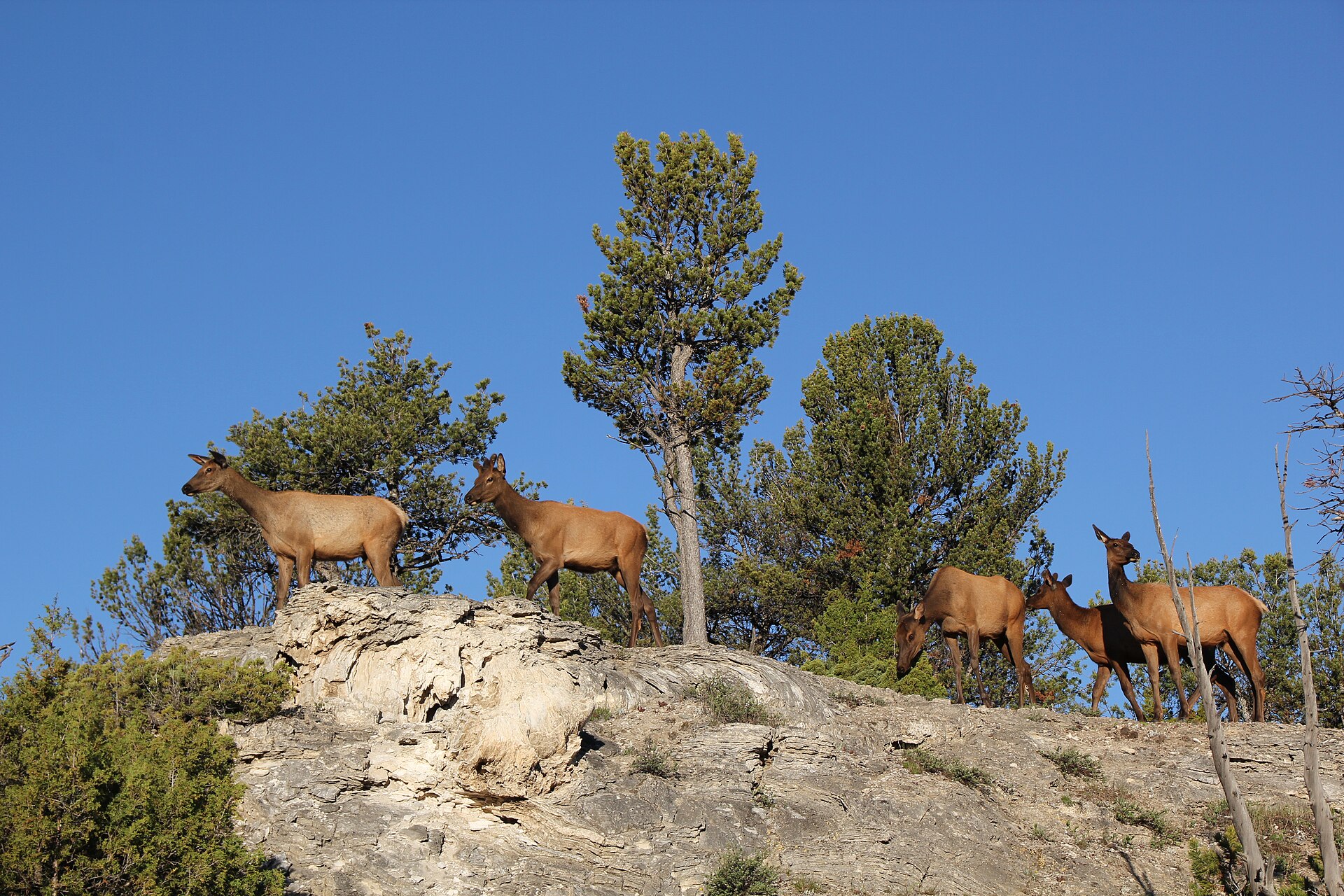
A group of elk stands on an open rocky ridge in Yellowstone with sparse trees and clear sky.

Elk on high ground. After wolves returned, the herds shifted uphill — and the willow valleys started growing back.

08 / 20

What followed · 1995 – 2020

The rivers changed shape because the wolves came back.

Year 5 — willows visibly recovering along the river valleys.

Year 10 — willow thickets tall again. Aspen and cottonwood follow.

Year 15 — beavers come back. They didn't get released. They found the willow.

Year 25 — beaver colonies ten times what they were in 1995. Wetlands, songbirds, trout, narrowed stream channels. The valleys reassemble.

The wolves didn't bulldoze any rivers. They changed where elk would stand for eight hours a day, and everything else followed.

09 / 20

Naming the pattern

A trophic cascade.

A change at one feeding level — usually the top — that ripples down through every level below it.

Wolves return top predator · 1995 Elk move uphill behavior · ecology of fear Willow recovers plants · 5–15 years Beavers return engineer · build dams Wetlands form ponds · meadows · water held Streams narrow banks reconsolidate Songbirds back willow thicket species Trout recover cooler streams The wolves didn't plant any willows. The wolves changed where elk would stand for eight hours a day. Everything else followed.
10 / 20

A quick honesty check

The Yellowstone story sometimes gets oversold.

Real ecologists who study this — Tom Hobbs, Roy Mech, others — will tell you the wolf story is real but partial. Some recovery would've happened anyway. Climate variation matters. Hunting pressure on elk outside the park matters. Some willow stands recovered more than others.

The cascade is well-documented. What's still being argued is how much of each effect is wolves, and how much is everything else happening at the same time.

Most ecology stories are like this. The world has more than one variable.

11 / 20

Backing up · The discovery moment

Mukkaw Bay, 1966.

A young ecologist named Robert Paine had a question. He wanted to know if every species mattered the same. Most ecologists at the time assumed yes. Paine wasn't sure. He chose two stretches of rocky shore in Washington State. From one, he removed every Pisaster ochraceus — this starfish — with a pry bar, every two weeks, for months. The other stretch he left alone.
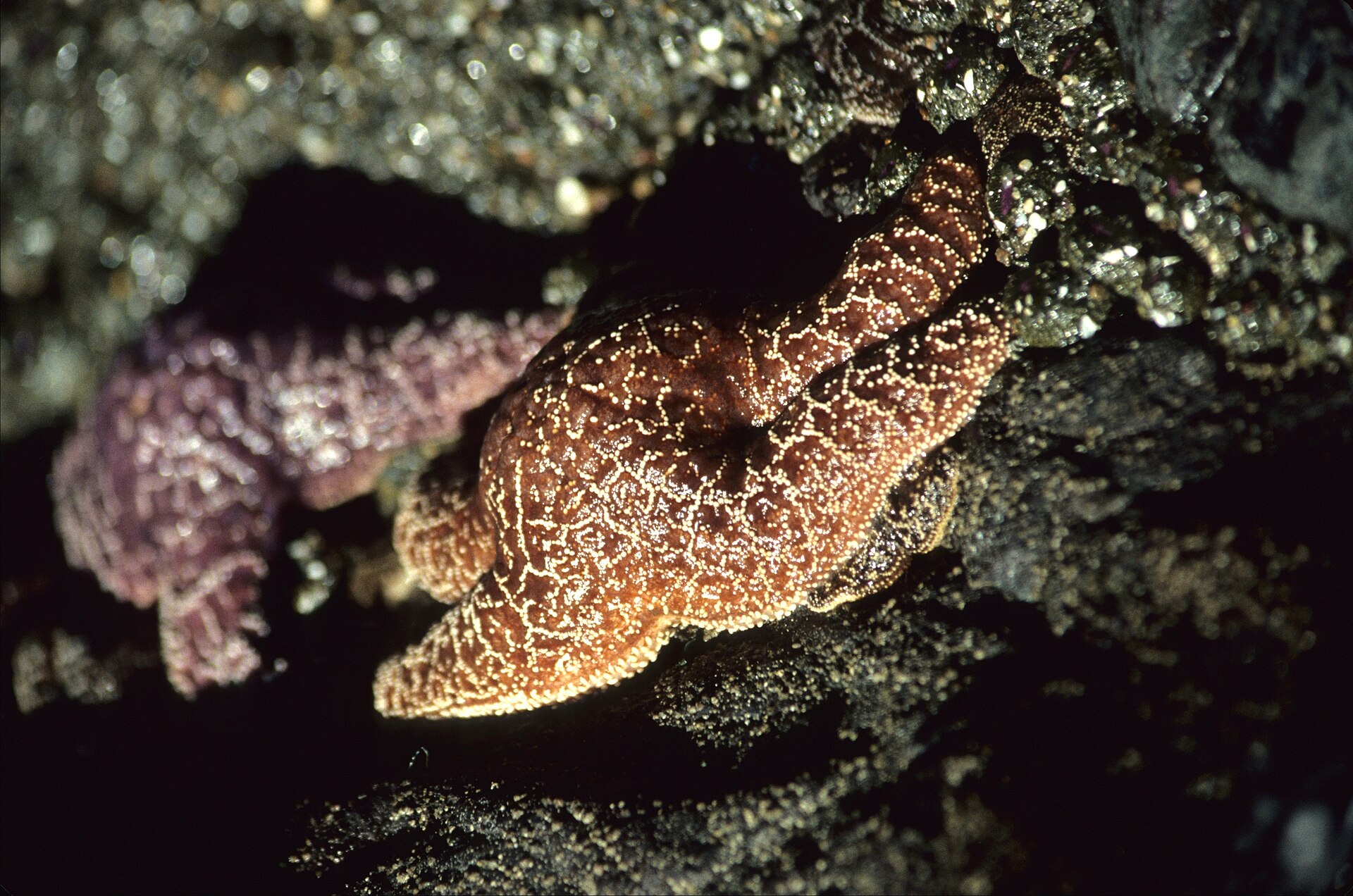
An orange ochre sea star (Pisaster ochraceus) on a wet rocky surface in the Pacific intertidal zone.

Pisaster ochraceus, the ochre sea star. Slow. Inconspicuous. About to redefine ecology.

12 / 20

After one year

The community collapsed.
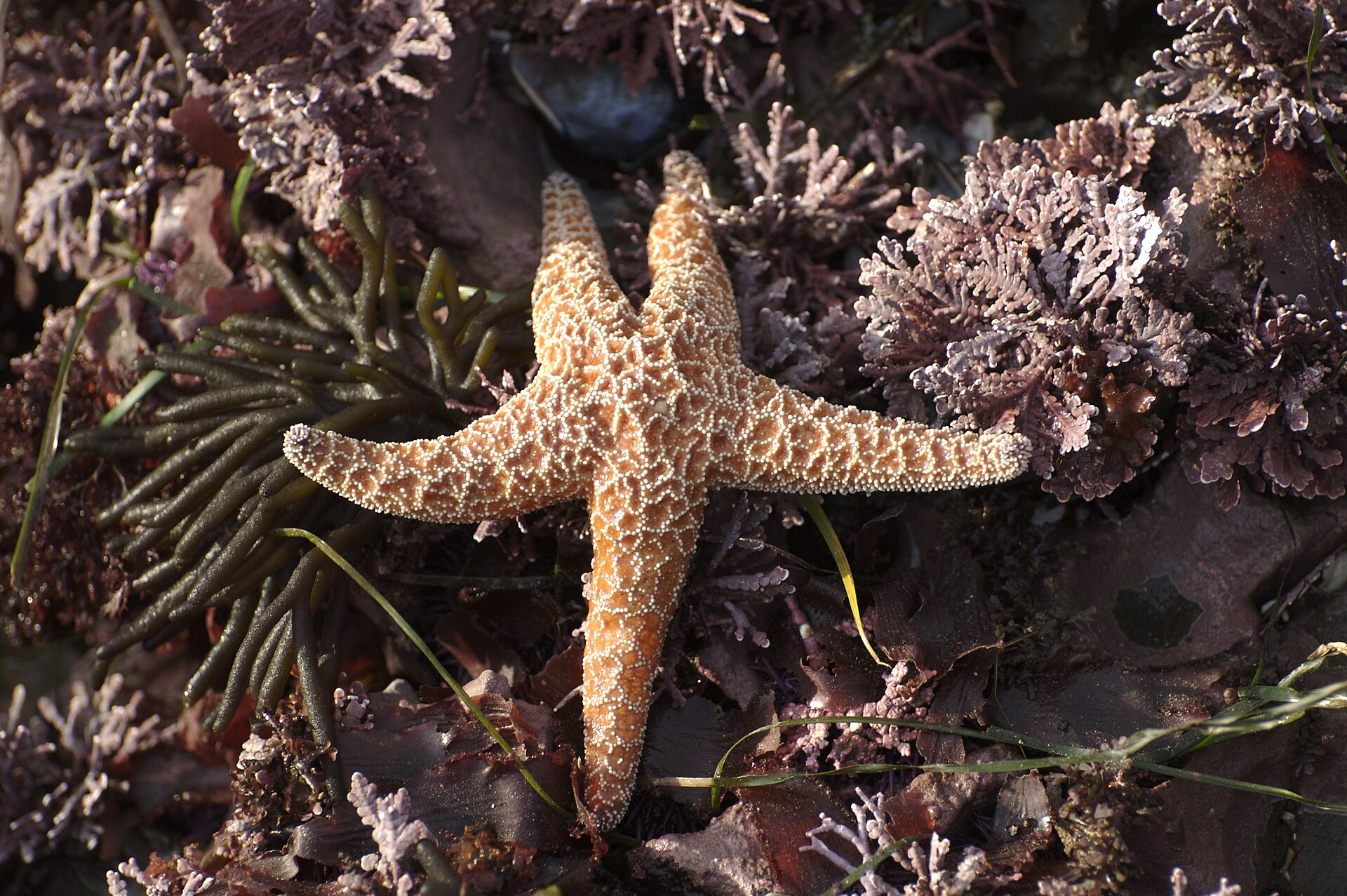
An ochre sea star surrounded by a diverse intertidal community — anemones, algae, and other invertebrates on rocky substrate.
CONTROL · WITH PISASTER
~15 species coexisting. Mussels, barnacles, limpets, anemones, algae — the keystone holds it open.
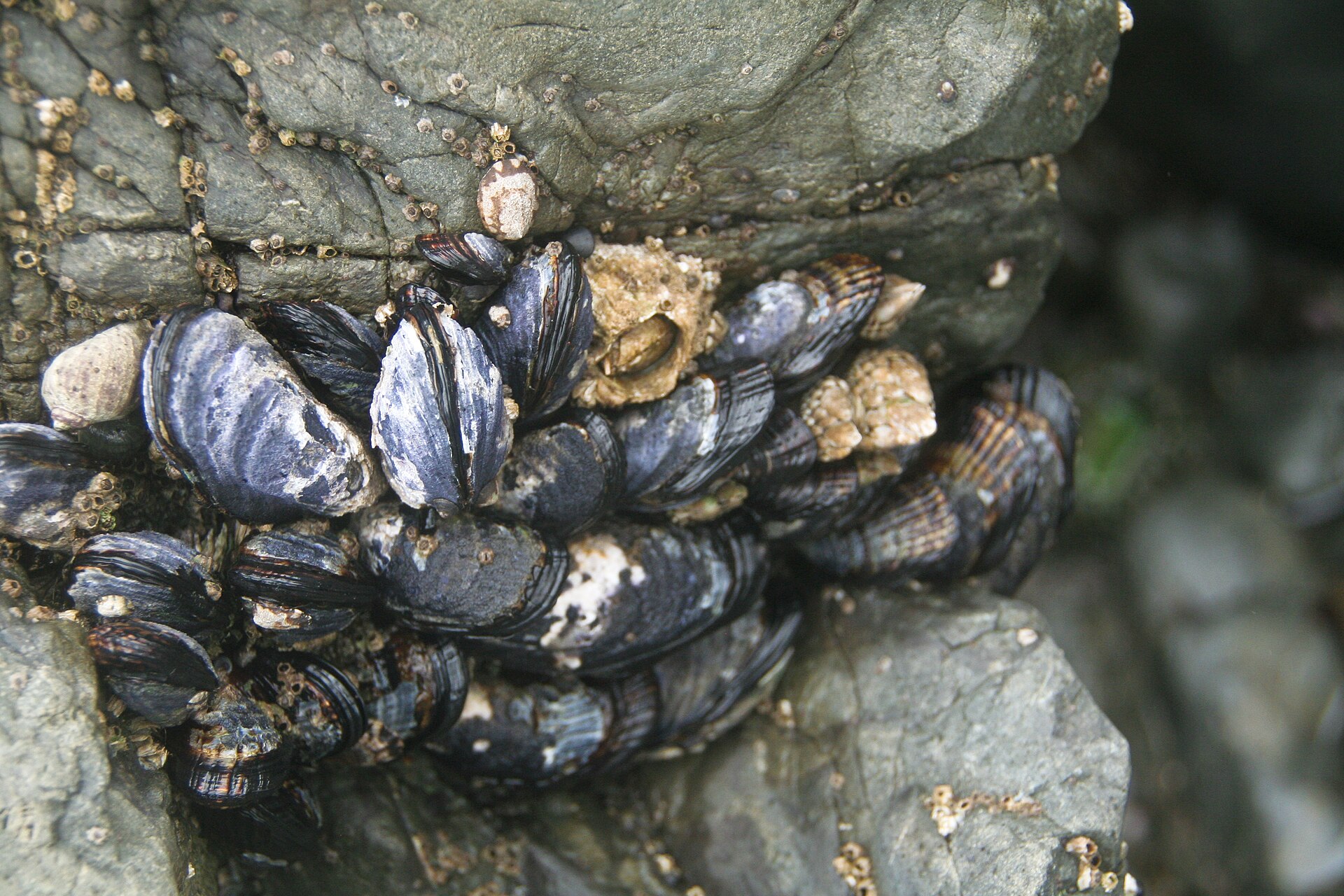
A dense California mussel bed covering rocky substrate, with barnacles among the mussels — a mussel-dominated rocky shore.
CLEARED · PISASTER REMOVED
Mussels take over. 8 species gone. Solid mussel wall, no bare rock.
13 / 20

Paine borrows a word from architecture · 1969

Keystone.

The wedge-shaped stone at the top of an arch. Not the biggest. Not the heaviest. Just the one in the position where everything else depends on it. Remove it, the arch falls.

keystone Pisaster in a tide pool. Wolves in Yellowstone. Sea otters off the Pacific coast. Different ecosystems. Same job.
14 / 20

Two ways to hold a system up

Foundation vs keystone.
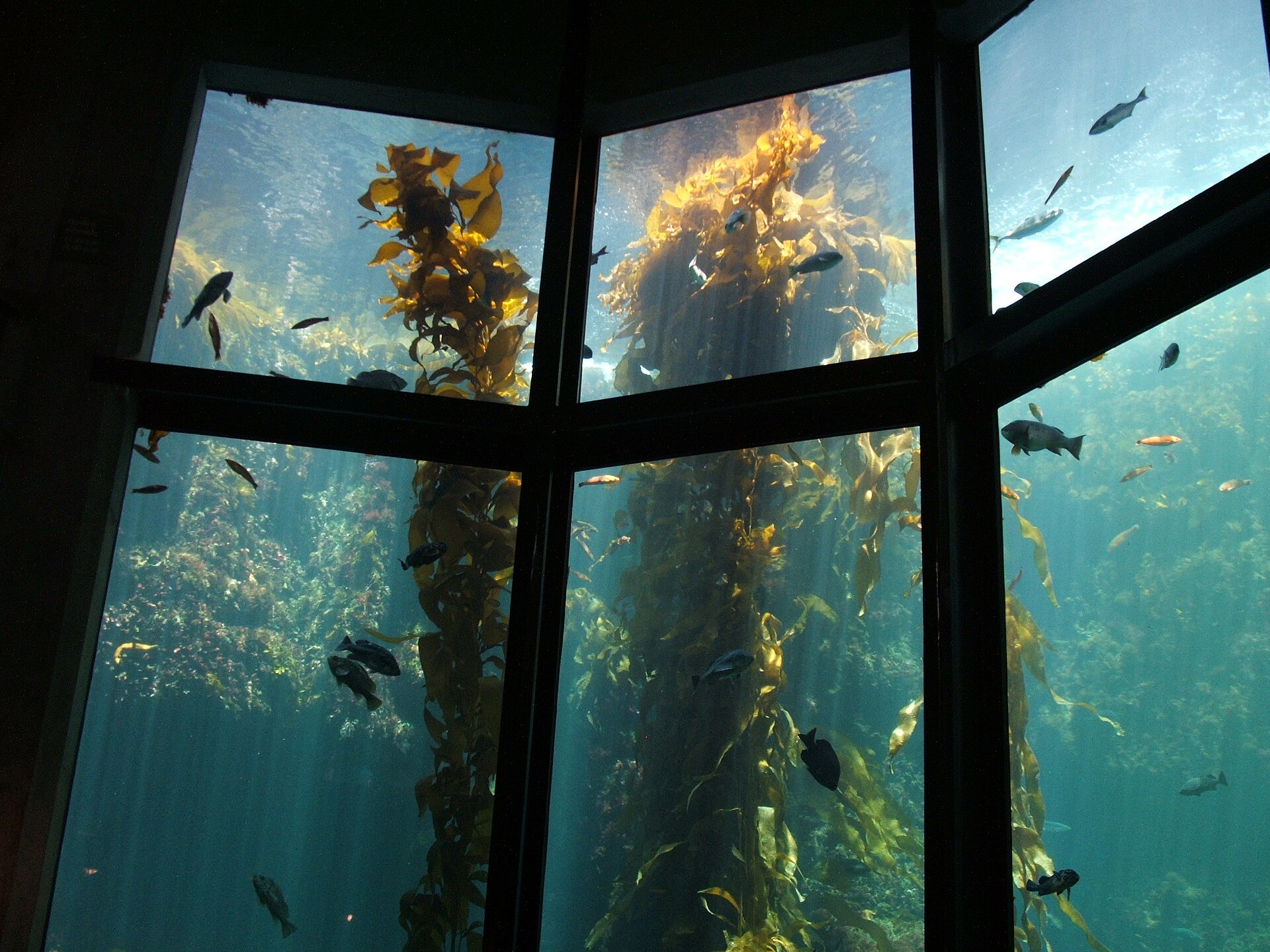
An underwater view of a giant kelp (Macrocystis pyrifera) forest with fish swimming among the kelp blades.
FOUNDATION · KELP
Bottom-up. They are the habitat. Kelp. Oaks. Coral. The structure itself.
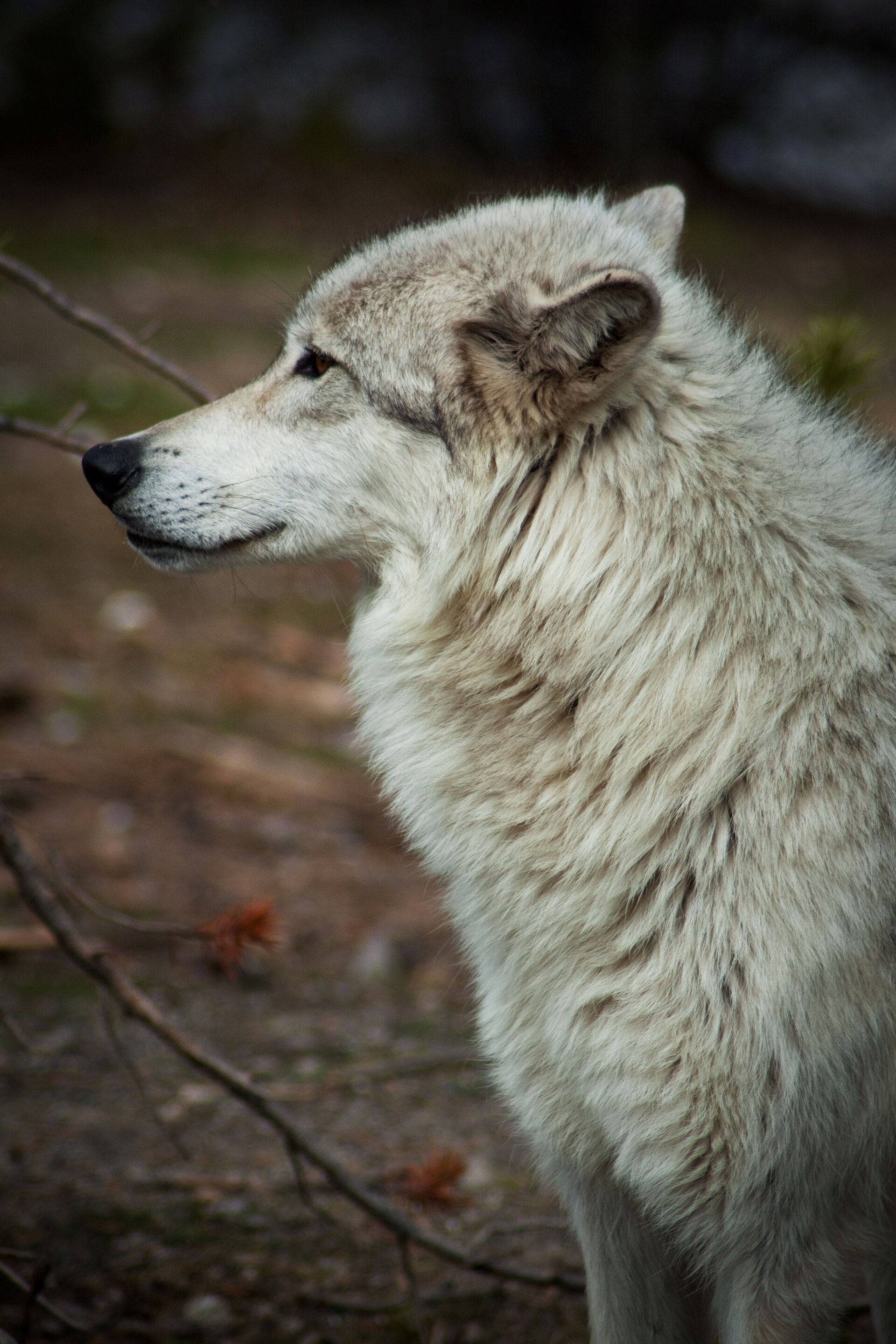
A close-up of a wolf (Canis lupus) in a natural setting.
KEYSTONE · WOLF
Top-down. They regulate. Wolves. Sea otters. Pisaster. Less abundant. Bigger effect.
15 / 20

Same pattern · different ecosystem · Pacific coast

Sea otters, sea urchins, kelp.

Otters eat urchins. Urchins eat kelp. Lose the otters, urchins explode, kelp dies — urchin barrens, flat rocky bottom, nothing else lives there. Bring the otters back, the forest comes back. Same shape as Yellowstone. Different ecosystem. Much longer coastline.
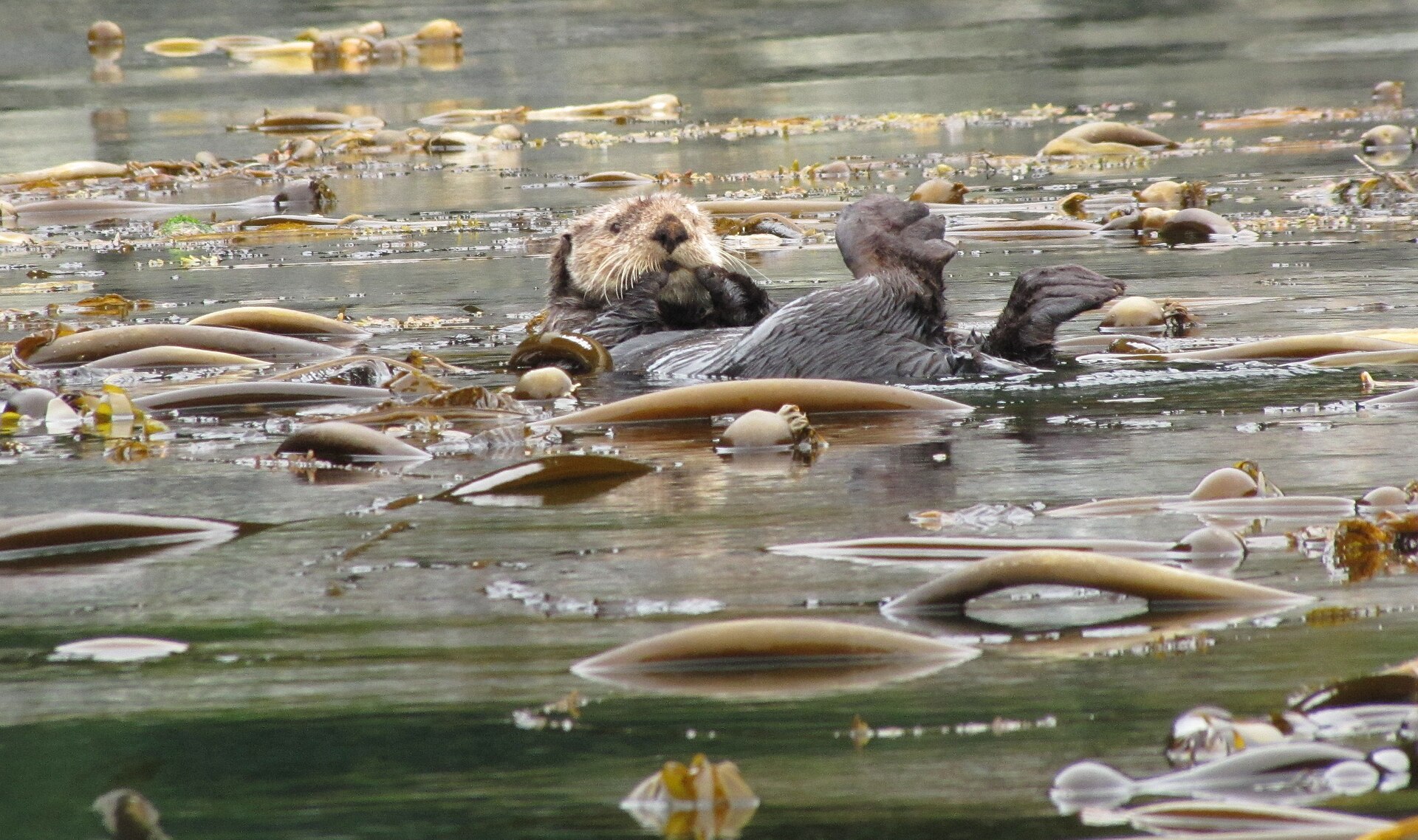
Two sea otters (Enhydra lutris) floating among kelp and seaweed on the water surface.

Sea otters in kelp. When this picture is possible, the whole ecosystem is possible.

16 / 20

Scope and scale

Three completely different ecosystems. Same pattern.

Mukkaw Bay · 1966
A few meters of rock

Tide pool · ~15 species · one starfish removed · community collapses to mussel monoculture.

Yellowstone · 1995
~2,200 square miles

Mountain ecosystem · thousands of species · wolves removed, valleys change · wolves returned, valleys come back.

Pacific coast · 1911
Thousands of miles of coastline

Kelp forest · hundreds of thousands of species · otters removed, kelp dies · otters returned, forest reassembles.

When you see the same shape across very different systems, the shape itself is the thing worth naming.

17 / 20

The framework, applied

Solutions by type.

Preventative

Don't lose the keystone in the first place. ESA. Marine protected areas. National parks that include the predator, not just the scenery. Hardest to fund — the cascade you prevent is invisible.

Reparative

Once the cascade has run, you can't really repair it as it happens. Mitigation only. Fencing willows. Hand-removing urchins so kelp can come back. Slow. Limited. Local.

Restorative

Reintroduction. Mexican wolves into the Gila. Sea otter range expansion. Beavers released across the American West. Whole ecosystems being put back, predator first.

The 1995 Yellowstone release was restorative. The 1911 sea otter treaty was preventative, after the worst of the damage. Most real solutions are mixes.

18 / 20

An honesty check, again

The people who lose livestock aren't the people who benefit from the cascade.

What we gain

Willows. Beavers. Wetlands. Songbirds. Trout. Rivers narrowing again. A national park functioning the way national parks are supposed to function.

Who bears the cost

A rancher in Wyoming whose calves are getting killed by a wolf pack. Their livelihood is now harder because of a policy decision they didn't make. That cost is real, and they're not the people seeing the willow.

Hold both. Compensation programs, predator-friendly ranching, paying for verified livestock losses — that's the political work of making the cascade and the livelihood coexist. It's slow. It's contested. It isn't finished.

19 / 20

What you walk away knowing

Two words. They do work.

Keystone species

A species whose removal collapses an ecosystem out of proportion to its abundance. Often a top predator. Wolves. Sea otters. Pisaster. The system can't function without them.

Trophic cascade

A change at one feeding level — usually the top — that ripples down through every level below it. Predator gone, prey explodes, prey's food disappears, the species that depended on the food disappear too. Put the predator back, the cascade runs the other way.

Next class: what happens when something new arrives in a system that didn't evolve with it. Invasive species. Same bundle, different mechanism.

20 / 20

Pick a cascade.

Run the framework on it. Problem. Causes. Scope and scale. Links. Solutions by type.

Go.